Branding for B2B
My friend Sanjeev makes memes about B2B SaaS.
About HRs, sales calls, enterprise software, and the absurdity of corporate life.
People told him it was dumb. "B2B is serious business. No one wants jokes."
Today? Companies put Sanjeev's videos in their pitch decks. His memes get shared in Slack channels at Fortune 500s. He built Supermeme, an AI meme generator, off the back of that audience.
Turns out, B2B buyers are humans. And humans like to laugh.
THE "BORING" LIE
Here's the myth that kills B2B brands: "We sell to businesses, so we need to sound professional."
"Professional" becomes code for:
- Jargon-filled copy nobody reads
- Stock photos of people shaking hands
- A tone so sterile it could pass a hospital inspection
The result? Every B2B company sounds identical. Blue logos. White websites. "Synergy" in the headline.
When everything looks the same, nothing stands out.
THE "MULLET STRATEGY"
The best B2B brands operate on what I call the Mullet Strategy:
Business in the front. Party in the back.
- Front (Product): Your product is serious. It solves real problems. It has enterprise features, SOC 2 compliance, and robust integrations.
- Back (Content): Your content is human. It has personality. It makes people smile, think, or feel something.
The product earns trust. The content earns attention.
Slack does this. Their product is enterprise collaboration software (boring). Their brand voice is playful, witty, and full of personality (not boring).
Mailchimp did this for years. Email marketing (boring). A cartoon chimp and weird animations (memorable).
Clay, the CRM platform, does this right now. The product is sales intelligence (boring). Their content is memes, chaos, and internet culture (magnetic).
WHY HUMOR WORKS IN B2B
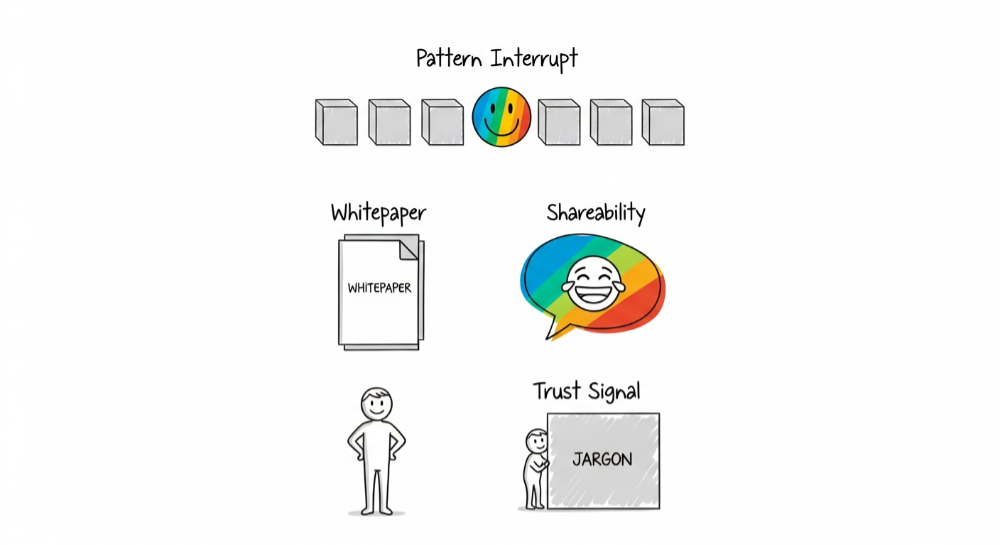
Three reasons:
- Pattern interrupt. When everyone zigs (corporate), you zag (human). Humor makes you the one people remember.
- Shareability. Nobody forwards a whitepaper to their colleague with "lol you have to see this." They do forward memes.
- Trust signal. If you're confident enough to have fun, you must be good at what you do. Insecure brands hide behind jargon.
Sanjeev understood this instinctively. By making B2B people laugh at themselves, he became the insider, not the outsider trying to sell them something.

HOW TO ADD PERSONALITY (WITHOUT BEING CRINGE)
The fear is: "If we joke around, people won't take us seriously."
Here's the trick: Be serious about your product. Be human everywhere else.
- Keep product pages clear and direct. Features, benefits, pricing. No jokes needed.
- Let content breathe. Blog posts, social media, newsletters---this is where personality lives.
- Find your "inside joke." Every industry has absurdities everyone knows but nobody says. Say them.
- Hire for voice. Your content person should actually be funny. You can't fake this.
THE DIAGNOSTIC
Answer honestly:
If you removed your logo from your website, could anyone tell it was you?
If your copy, tone, and visuals could belong to any competitor --- you don't have a brand, you have a template.
B2B doesn't mean boring. It means your buyers sign contracts instead of clicking checkout.
They're still humans. Talk to them like it.
Your brand strategist,
Shashank SN
Fractional Chief Brand Officer
P.S.
Sanjeev's "dumb" meme account became the foundation for a real SaaS company. The people who told him B2B is serious? They're still writing whitepapers nobody reads.
P.P.S.
If your marketing team is scared to post anything "too fun," that fear is the problem. The safest path in B2B is now the riskiest, because everyone's on it.
11, PNR Nagar
Dindigul, Tamil Nadu 624001, India

No comments yet. Be the first to comment!