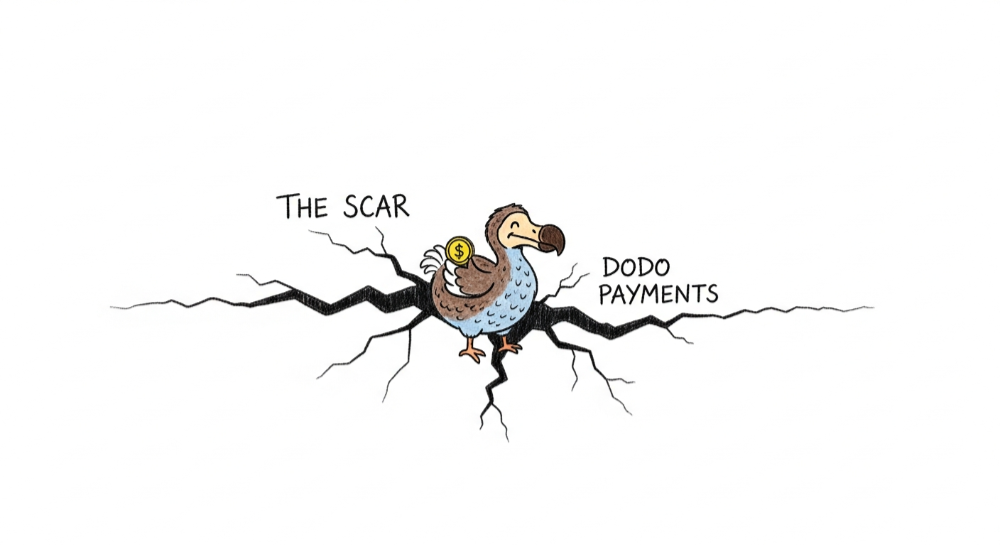
The scar that started Dodo Payments
Ayush Agarwal had a million users on his gaming platform, Tournafest.
40% of them were outside India.
And he couldn't make a single penny from them. 😤😤😤
Bangladesh. Europe. The Middle East. Users everywhere, wanting to pay, credit cards in hand and he had to tell them no.
Why?
Because gaming was a "restricted category" in half these countries. Compliance nightmares. Tax labyrinths. Payment gateways that looked at his use case and said, "lol nope."
His small team didn't have the bandwidth to become regulatory experts in 47 different jurisdictions.
So they did what most founders do in that situation:
They gave up on 40% of their market.
AND THAT'S WHERE THIS STORY REALLY BEGINS.
In 2023, Ayush teamed up with Rishabh Goel, a guy who'd spent years in the payments trenches at Wise and Prodigy Finance.
Rishabh had seen the problem from the infrastructure side.
Ayush had lived it as a founder.
Together, they decided to build the solution they both wished existed.
Fast forward to early 2025: Dodo Payments raised $1.1M in pre-seed funding from Antler, 9Unicorns, and Venture Catalysts. Angel investors included folks from PayU, Oyo, Flipkart, and a16z. 💰💰💰
But here's what's interesting about that fundraise:
It wasn't about the money. It was about the signal.
When people who've built PayU and worked at a16z write you angel checks, they're not just betting on your product. They're betting on YOU understanding the problem better than anyone else.
And Ayush understood it because he'd FELT it.
That authenticity, that founder-problem fit --- it's something you can't fake.
Brands built on real pain solve real problems
Because that pain, that specific, visceral frustration of watching revenue slip through your fingers because of backend complexity, became the foundation of Dodo Payments.
Now, before we dive deep into how they built this brand...
Let me be crystal clear about something:
This isn't another breakdown cobbled together from random blog posts and LinkedIn stalking.
This is the latest edition of Brick by Brick , where I sat down with the people who actually built Dodo Payments from scratch. Asked them the uncomfortable questions and got the real answers.
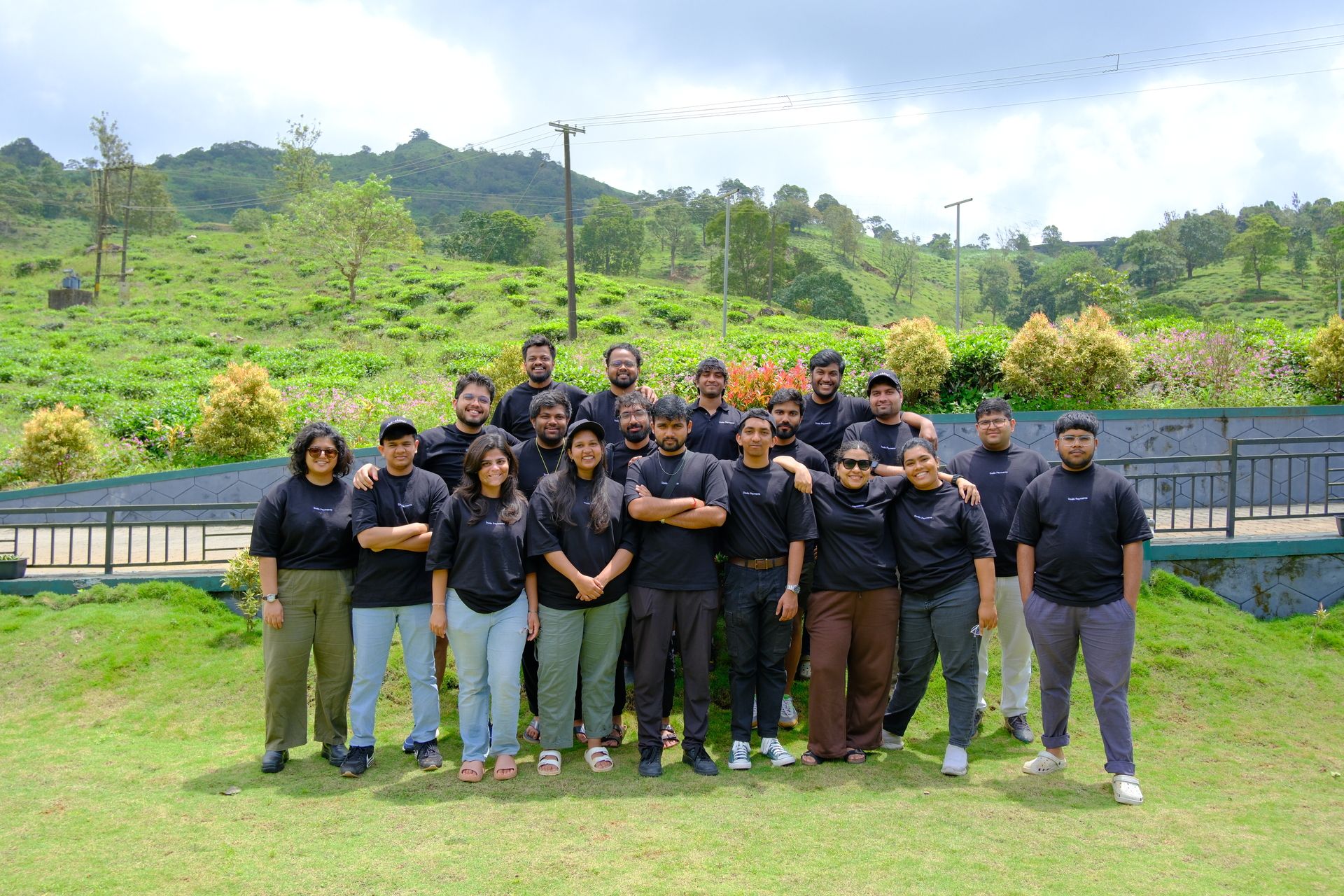
This is a breakdown BY the company and me, not a secondhand interpretation of their marketing copy.
That distinction matters.
Because when you're learning how to build a brand, you don't want the polished PR version.
You want the architecture. The decisions. The philosophy.
Let's get into it.
Part 1: The Name Nobody Forgets
Here's a question nobody asks enough when starting a company:
"Will people feel intimidated just LOOKING at our brand?"
Fintech companies love sounding serious.
"Apex Financial Solutions."
"GlobalTrust Payments."
"SecureCore Technologies."
You know the vibe. 🙄
It's just forgettable.
The Dodo Payments team went a different direction entirely:
THEY NAMED THEMSELVES AFTER AN EXTINCT BIRD.
I asked them about this.
Here's what they told me:
Read that again.
In an industry where everyone's trying to sound like a Goldman Sachs subsidiary, these guys chose a name that makes you smile.
And that's not an accident; it's the whole strategy. Because their target customer isn't a Fortune 500 CFO with a legal team on speed dial. Their target customer is a solo developer who built an AI tool in their bedroom and needs to start charging for it by Tuesday.
Different customers = Different brand energy.
The Dodo Payments brand says, "We're not going to make this complicated. We're not going to talk down to you. We're going to help you get paid."
THAT'S THE FOUNDATION EVERYTHING ELSE IS BUILT ON.
Part 2: The Mission
Most company mission statements read like they were written by a committee of lawyers having a stroke.
"We leverage synergistic solutions to optimize stakeholder value across vertical integrations..."
🤮🤮🤮
Dodo Payments's mission?
That's it.
And this mission --- it's SPECIFIC.
They're not trying to be everything to everyone. They're not chasing offline retailers or restaurant POS systems or enterprise ERP integrations. They picked a lane: Digital and AI-native products.
And they're going ALL IN on that lane. This specificity shows up everywhere in their brand:
- The messaging
- The product design
- The partnerships they pursue
- The content they create
When you know exactly who you serve, every decision becomes easier.
When you try to serve everyone?
You end up serving no one well.
LESSON: SPECIFICITY ISN'T LIMITING. IT'S LIBERATING.

Turn AI into Your Income Engine
Ready to transform artificial intelligence from a buzzword into your personal revenue generator
HubSpot's groundbreaking guide "200+ AI-Powered Income Ideas" is your gateway to financial innovation in the digital age.
Inside you'll discover:
- A curated collection of 200+ profitable opportunities spanning content creation, e-commerce, gaming, and emerging digital markets---each vetted for real-world potential
- Step-by-step implementation guides designed for beginners, making AI accessible regardless of your technical background
- Cutting-edge strategies aligned with current market trends, ensuring your ventures stay ahead of the curve
Download your guide today and unlock a future where artificial intelligence powers your success. Your next income stream is waiting.
Part 3: How They Talk (Without Sounding Like Robots)
Fintech has a jargon problem.
Payment rails. Merchant acquiring. PCI-DSS compliance. Settlement windows. Interchange fees.
Uhhhh....
The average founder hears this stuff and their eyes glaze over faster than a Krispy Kreme donut. 🍩
They made a conscious decision to speak differently.
Here's how they described it to me:
Did you catch that?
Outcomes, not features.
They don't say, "We provide multi-currency payment processing with automatic FX conversion and real-time settlement across 80+ currencies."
They say, "Sell to customers in 150+ countries without worrying about currency or compliance."
And they adapt this messaging for different markets:
One truth. Many expressions.
That's the formula.
Part 4: The Consistency Principle
Here's where most startups completely fall apart with branding:
They nail the website copy.
Then someone writes support docs that sound like a different company.
Then the sales deck uses different language entirely.
Then social media goes rogue with its own vibe.
Result? 🤦🤦🤦
A brand that feels schizophrenic.
They built systems to prevent this:
They maintain:
- A central messaging guide
- A visual library
- UX patterns that carry across every touchpoint
So whether you're on their website, inside their dashboard, reading their docs, talking to support, or seeing their content on social, it all feels unmistakably like Dodo Payments.
THIS DOESN'T HAPPEN BY ACCIDENT.
It happens because someone sat down and created the infrastructure for consistency, and yet most founders think branding is a logo and a color palette. Real branding is a SYSTEM that ensures every customer interaction reinforces the same story.
Part 5: UX as Brand Proof
Here's something most founders miss:
Your product experience IS your brand.
You can claim "simplicity" in your marketing all day long.
But if your dashboard looks like it was designed by a committee of confused engineers...
If your onboarding takes 47 steps and three blood samples...
If your documentation reads like stereo instructions from 1987...
Then your REAL brand is "complicated." No matter what your tagline says.
Dodo Payments gets this:
And then they dropped this gem:
UX IS NOT DECORATION.
IT'S PROOF.
That's such a powerful reframe.
Quick personal aside:
I'm not easily impressed by companies. Most fintech brands feel interchangeable to me.
But Dodo? They made me feel seen as a customer.
Like I actually matter. Like someone's listening.
I don't get paid to say this. I just genuinely tell people, "Use Dodo Payments."
When a brand makes you want to spread the word for free, that's the ultimate proof their product matches their promise.
Every design decision is a chance to either prove or disprove what your brand claims to be.
If you say you're simple, every interaction better FEEL simple.
If you say you're transparent, every screen better SHOW transparency.
The product IS the brand. 🎯🎯🎯
Part 6: Dancing With Giants
Now let's address the elephant in the room.
Or rather, the GIANTS in the room.
Stripe. Razorpay. PayPal. Adyen.
These are companies with billions in funding, thousands of employees, and decade-long head starts.
So how does a startup founded in 2023 with $1.1M in pre-seed funding even begin to compete? 😅
Here's how Dodo Payments thinks about differentiation:
See what they did there?
They didn't try to be a "better Stripe."
They redefined the category entirely.
Stripe = Payment processor.
Dodo Payments = Monetisation engine.
Different positioning.
And they got even more specific:
This is the classic "niche to win" strategy.
Don't try to serve everyone.
Serve a specific customer SO WELL that the giants can't match you, because they're too busy serving everyone else.
The USP?
FOCUS.
Here's how they put it, and this is where being small actually becomes an advantage:
When you're Stripe, you have to build features that work for millions of merchants across every industry imaginable. When you're Dodo Payments, you can build features specifically for the solo AI developer who needs to go live in 48 hours.
That's the superpower. 💪💪💪
Part 7: Storytelling as Strategy
Fintech is confusing.
Tax codes. Compliance frameworks. Currency regulations. MoR structures.
The average founder would rather get a root canal than read a white paper about cross-border VAT compliance.
So how do you communicate complex stuff without losing people?
Dodo Payments' answer: Story.
And they have a simple framework for every piece of content:
Three questions.
Problem. Stakes. Speed.
THAT'S THE FORMULA FOR CUTTING THROUGH COMPLEXITY.
Whether it's a new feature announcement, a compliance update, or a launch post, the story always ties back to the founder's journey.
Because founders don't care about payment rails. They care about getting their product into customers' hands and getting paid for it.
Lead with their story, not your technology.
Think about that for a second.
Most companies lead with "Here's our cool new feature!" and expect customers to figure out why they should care.
Dodo Payments flips the script: Start with the founder's struggle. Connect to their pain. THEN reveal how you solve it.
That's empathy operationalized. ❤️
Part 8: What Actually Works (Marketing Edition)
I asked them about marketing campaigns and initiatives that moved the needle.
Here's what they said:
Notice what's NOT on that list?
Paid ads.
Cold outreach.
Influencer partnerships.
Instead:
- Founder-led content. The actual founders sharing insights from their journey.
- Product-led launches. Let the product speak for itself.
- Educational content. Teach people what you know.
REAL VALUE > AD SPEND.
Every. Single. Time.
This isn't revolutionary advice.
But it IS advice that most companies ignore because creating real value is HARD. It's easier to throw money at Facebook ads than to sit down and create genuinely useful content.
But the companies that invest in value creation build something that paid acquisition can never buy:
Trust. Authority. Community.
Part 9: Community as Moat
Speaking of community...
Here's maybe the most important thing they told me:
Any competitor with enough engineering talent can build payment infrastructure.
But community? Relationships? Trust?
Those take YEARS to build.
And they can't be copied.
Read that again and let it sink in. 🧠
Two different functions:
Partnerships = Reach
Community = Relevance
You need both.
Partnerships get you in front of new audiences.
Community keeps you deeply connected to what those audiences actually need.
Most startups focus exclusively on reach.
Here's what most founders get wrong:
They treat community as a marketing channel. Something to "do" after the product is built.
But Dodo Payments treats community as a product development input. They're not just broadcasting TO developers, they're learning FROM developers.
That's a fundamentally different orientation.
And it shows in how closely their product matches their users' actual needs.
The smart ones invest equally in relevance.
Part 10: The Trust Playbook
We're talking about money here.
People's revenue. Their livelihoods. Their businesses.
Trust isn't a nice-to-have in fintech.
It's EVERYTHING.
So how does a young startup build trust against established players?
They has three pillars:
Let's break these down:
- Predictability: No surprises. What you see is what you get. Pricing is clear. Processes are consistent.
- Transparency: Nothing hidden. Everything is auditable. Clear contracts. Explicit tax handling.
- Compliance: They're not cutting corners on regulations. They're not in a gray zone. They're doing things properly.
TRUST COMPOUNDS.
Because trust isn't built through one big gesture, it's built through hundreds of small moments where you do what you said you'd do.
Most payment companies try to win with speed or price. Those are table stakes.
Dodo Payments wins with trust. And trust can't be bought with money or engineering hours. It can only be earned through consistency.
Over time, those moments stack up.
And eventually, you have something competitors can't touch.
Part 11: The Vision (And Where They're Headed)
Every brand needs a north star.
Something bigger than quarterly metrics.
Dodo Payments' Vision:
"To create a world where any builder can open their laptop, create value, and instantly monetize across borders without understanding tax codes, currency rules, or compliance frameworks."
That's a beautiful vision.
Because it's not about Dodo Payments.
It's about what Dodo Payments ENABLES.
The solo developer in Nigeria who builds an AI tool.
The indie hacker in Vietnam with a SaaS product.
The creator in Brazil with digital courses.
All of them are able to sell globally, instantly, without becoming regulatory experts.
THAT'S THE WORLD DODO IS BUILDING TOWARD.
And they're making progress.
Part 12: The Customer Story That Says It All
I always ask for customer stories.
Because they reveal what the brand actually delivers versus what it claims to deliver.
Here's the one they shared:
A solo AI developer who built a niche product but couldn't sell globally because of compliance and tax obstacles. With Dodo Payments, he went live in less than a week and scaled to customers in more than 20 countries without touching a single payment, tax, or currency workflow.
It is a simple story, but it captures our purpose perfectly.
THAT'S THE BRAND PROMISE IN ACTION.
🤪 The Stupid Take
Alright, you've made it this far.
You've seen the origin story.
The naming philosophy.
The messaging strategy.
The differentiation playbook.
The trust framework.
Now here's my take on what this all actually MEANS for founders and marketers. 👇👇👇
THE BIG LESSON ISN'T ABOUT PAYMENTS.
It's about this:
Dodo Payments succeeded by refusing to play someone else's game.
When you're entering a market with giants, the temptation is to compete on THEIR terms.
- Better features than Stripe!
- Lower fees than Razorpay!
- Faster than PayPal!
That's a losing game.
Because giants have more resources.
So Dodo Payments did something smarter:
They defined a NEW game.
- Not "payment processor" → "Monetisation engine."
- Not "everyone" → "AI-native products."
- Not "scale" → "Agility."
And here's the thing, this applies to ANY industry.
If you're a freelance designer competing with Fiverr on price, you'll lose.
If you're a SaaS startup competing with Salesforce on features, you'll lose.
If you're a content creator competing with MrBeast on production value, you'll lose.
BUT...
If you define a different game --- a game where YOUR strengths matter, you can win.
Maybe you're the designer who only works with Web3 startups.
Maybe you're the SaaS that only serves solo consultants.
Maybe you're the creator who goes deep on one weird niche.
SPECIFICITY ISN'T LIMITATION.
IT'S LIBERATION.
The brand works because every decision flows from a clear understanding of:
- WHO they serve (AI-native, digital-first products)
- WHAT they believe (monetisation shouldn't be the hardest part)
- HOW they're different (end-to-end engine, not just transactions)
That's it.
That's the whole framework.
Who. What. How.
Get those three right, and every other branding decision becomes obvious.
The name? Should reflect what you believe.
The messaging? Should speak to who you serve.
The product? Should prove how you're different.
Dodo Payments got all three.
And that's why they're building something real in a market where most startups get crushed by the giants.
DON'T PLAY THEIR GAME.
DEFINE YOUR OWN.
Your Brand-Building Checklist (Steal This)
Before I wrap up, let me give you something practical.
Based on everything Dodo Payments taught me, here's a checklist you can use for YOUR brand: 📋📋📋
- The Founder-Problem Fit Test: Did you personally experience the problem you're solving? Not "I noticed a market gap" but "I felt this pain so deeply I had to fix it." Ayush couldn't monetize 40% of his users. That's not market research, that's a scar, and scars make better brands than spreadsheets.
- The Name Energy Test: Does your brand name match your customer's emotional state? Dodo Payments' target customer is overwhelmed by complexity. The name promises approachability. Match made in heaven. If you're selling to stressed-out founders, maybe don't call yourself "Apex Ultimate Solutions Pro." 😅
- The Mission Specificity Test: Can you state your mission in under 15 words without using any jargon? If your mission statement needs a glossary, rewrite it.
- The Outcomes vs. Features Test: Take your website copy. Count how many times you talk about features vs. outcomes. "Multi-currency processing" = feature. "Sell globally without thinking about currency" = outcome. Outcomes win every time.
- The Product-Brand Alignment Test: If you claim simplicity but your onboarding takes 30 minutes, you're lying to your customers. Your product experience IS your brand. No exceptions.
- The Category Reframe Test: What category do giants own? Now, can you create a NEW category where you're the obvious winner? Payment processor → Monetization engine. CRM → Revenue intelligence platform. Whatever your space, find your reframe.
- The Trust Audit: Are your fees obvious? Is everything auditable? Do you communicate changes before they happen? Trust compounds. Every hidden fee or surprise policy erodes it.
- The Community Investment Test: Are you building a community or just a customer list? Customer lists can be bought. Communities can't. Which one are you investing in?
THAT'S THE PLAYBOOK.
Use it. Adapt it. Build something worth talking about.
The world doesn't need more companies. The world needs more companies that give a damn.
Dodo Payments gives a damn.
Does your brand?
🔥🔥🔥
Until next time --- your brand-obsessed friend,
Shashank "Brick by Brick" SN
P.S.
If you know a founder building something cool who needs to hear this breakdown, forward it to them. Good ideas deserve to spread. 🔥
P.P.S.
TheDodo Payments team was incredibly generous with their time and insights. If you're building digital or AI products and struggling with global payments, give them a look. Sometimes the small players really ARE better for your specific situation.
P.P.P.S.
If you've got a brand you want me to break down in a future edition, hit reply. I'm always hunting for companies doing branding differently.
11, PNR Nagar
Dindigul, Tamil Nadu 624001, India

No comments yet. Be the first to comment!